
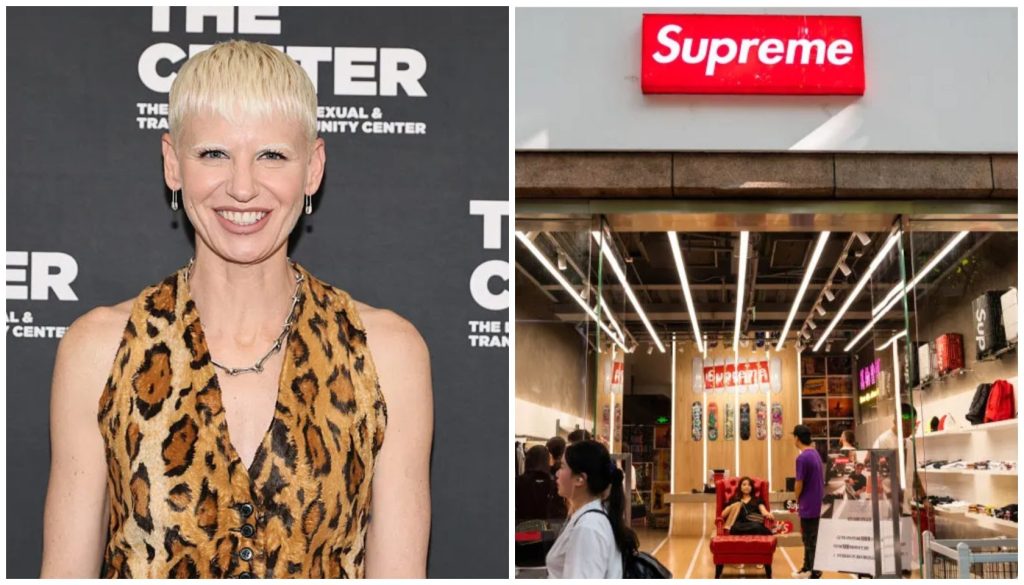
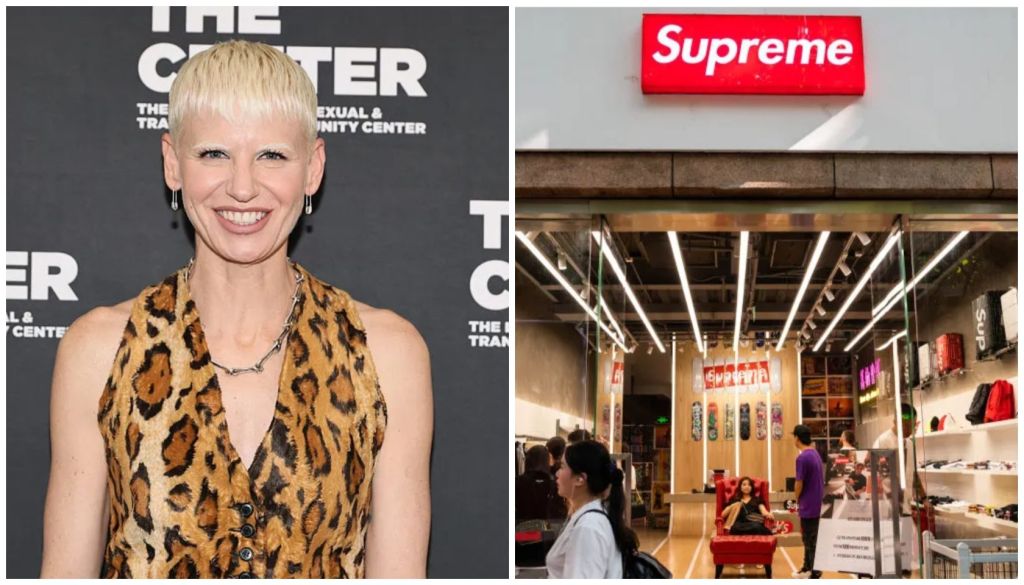
Erin Magee is closing the book on more than two decades at Supreme, but the conversation surrounding her departure has quickly become about much more than one executive leaving a legendary streetwear brand. On Wednesday, August 19, Magee announced that she was stepping down as chief creative officer at Supreme after 22 years with the company, sharing a carousel of memories from her time there. The longtime creative joined Supreme in 2004, eventually rising from production manager to one of the most influential people shaping the brand behind the scenes.
Magee’s tenure spanned the period when Supreme went from a beloved downtown New York skate shop to an internationally recognized fashion powerhouse. By 2013, she was serving as the brand’s production manager and helping develop everything from clothing to Supreme’s coveted camp caps before eventually becoming CCO. Outside of Supreme, Magee also founded womenswear brand MadeMe in 2007, building a reputation for bringing punk, Riot Grrrl and other subcultures into a streetwear world that has historically been dominated by men.
But it was one of the photos included in Magee’s farewell post — a large group shot featuring Supreme employees — that really got social media talking. Instead of focusing solely on Magee’s accomplishments, users immediately began questioning the apparent lack of Black faces in the company’s workforce, especially given how closely Supreme’s identity has been tied to hip-hop, streetwear, skate culture, and other spaces where Black creatives have played an enormous role. One viral response from X user (@YoungCorey) summed up the reaction, helping spark an even larger discussion about who gets to profit from culture versus who gets opportunities behind the scenes.
And this isn’t exactly a brand-new criticism for Supreme. When Tremaine Emory, founder of Denim Tears, left his position as Supreme’s first official creative director in 2023 after only two seasons, he publicly alleged that “systemic racial issues” existed within the company. Emory said at the time that Supreme’s design studio had fewer than 10% minority employees despite, in his view, the company being heavily influenced by Black culture. He also described Supreme as a “white, hetero male dominated company and C-suite,” arguing that the makeup of leadership inevitably affected the decisions being made inside the brand.
Emory’s departure centered largely around disagreements over a planned collaboration with acclaimed Black artist Arthur Jafa. Emory said that imagery associated with the project was removed without his proper consultation, despite his role as creative director. Supreme pushed back on his characterization of the company at the time, saying it took his concerns seriously but “strongly” disagreed with his account of the situation and maintained that the Jafa collaboration had not been canceled. Still, three years later, Magee’s team photo has caused many people to revisit Emory’s comments and question how much — if anything — has changed since then.
All of this comes while Supreme itself continues to adjust to life under different corporate owners. VF Corporation purchased the company for $2.1 billion in 2020, before selling it to eyewear giant EssilorLuxottica for $1.5 billion in 2024. Founder James Jebbia remained involved following the sale, while Magee became one of the major constants throughout the ownership and creative shakeups. Supreme has not yet announced who will replace her as chief creative officer.